Eating healthier on a budget doesn’t have to mean changing everything you buy or cook. Start with the food your household already enjoys, then look for small ways to add variety and use more of what you purchase. A plan can be flexible: the goal is to make shopping and mealtimes easier, not to follow a perfect menu.
Plan meals around what you already have
Before making a shopping list, check your cupboards, refrigerator and freezer. Note ingredients you want to use and think about meals they could make. Planning meals and shopping from a list can help reduce food waste and impulse purchases.
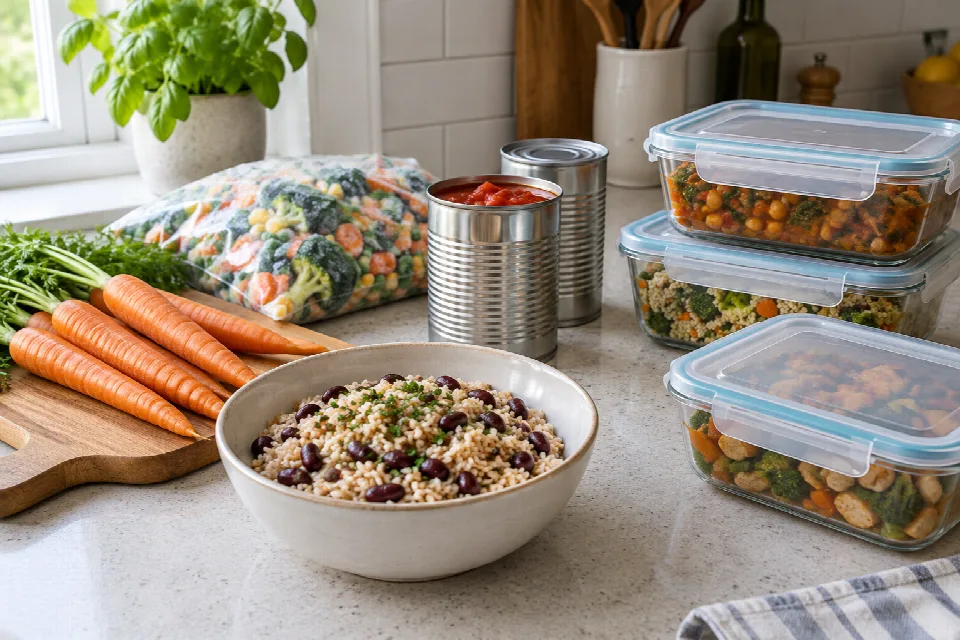
For example, rice could become the base for a bowl with beans and vegetables, while pasta could go into a meal with canned tomatoes and a protein of your choice. Write down a few meals rather than assigning every dish to a particular day. That leaves room to move things around when plans change.
Shop with a list and compare options
Build your list from the meals you’ve planned, adding the staples you need to replace. Organize it by the sections of the store you usually visit, or group ingredients by meal. Either approach can make it easier to see what you need.
At the shelf, compare package sizes and unit prices when they’re displayed. Consider store brands alongside familiar brands, and check whether a larger package is something your household can use. You can also compare whole ingredients with prepared options and decide which fits your budget and available time. If an unplanned purchase catches your eye, consider how it would fit into a meal before adding it to your cart.
Choose fresh, frozen or canned produce
Fresh, frozen and canned fruits and vegetables can all be useful options. Frozen and canned produce can last longer than fresh produce and may be as nutritious as fresh out-of-season options. Compare the choices available to you rather than assuming one form is always the best fit.
Think about when and how you’ll use each item. Fresh produce might suit meals planned for the next few days, while a bag of frozen vegetables or a can of tomatoes can be kept for another meal. Check labels and choose products that suit your preferences. You might also try seasonal produce when it fits your shopping list and budget.
Explore budget-friendly protein options
Consider a mix of protein foods when planning meals. Eggs, dried or canned beans, lentils, tofu, canned fish and chicken thighs or legs are options to compare with other meats. Prices vary, so check what works for your household rather than relying on one choice.
You don’t need to introduce several unfamiliar foods at once. Try adding beans to a meal your family already likes, serving eggs with vegetables, or using lentils in a soup. If you’re trying a new ingredient, choose a recipe with a short list of familiar ingredients and adjust the seasoning to your household’s taste.
Cook in batches and reuse leftovers
When you have time to cook, consider making an extra portion for another day. Batch cooking and repurposing leftovers can help stretch ingredients. A pot of beans, cooked rice or a vegetable-based sauce can become part of more than one meal.
To keep meals interesting, change how you serve the leftovers. Use cooked vegetables in a grain bowl one day and add them to a soup another day. Portion extras into containers and label them so you know what you have. If you plan to freeze a meal, think about portions that match how your household will use them.
Build a flexible routine for your household
Choose one or two habits to try first. You might check the freezer before shopping this week, then plan a leftover meal next week. Keep a short list of meals your household enjoys so you have somewhere to start when time is limited.
Leave room for convenience when you need it. A simple meal using canned beans, frozen vegetables and a grain can still be part of your plan. Review what worked before your next shop: Which ingredients got used? Which meals did people enjoy? Adjust from there. If you have questions about your family’s nutritional needs or dietary restrictions, consider speaking with a registered dietitian or another qualified professional.
Sources
- https://nutritionsource.hsph.harvard.edu/strategies-nutrition-budget/, nutritionsource.hsph.harvard.edu
- https://money.usnews.com/money/articles/how-to-eat-healthy-on-a-budget, money.usnews.com
- https://www.teohl.com/cost-of-healthy-eating-data-strategies/, www.teohl.com
- https://www.realsimple.com/how-to-eat-healthy-on-a-budget-12115761, www.realsimple.com
- https://www.consumerreports.org/health/healthy-eating/how-to-eat-healthy-on-a-budget-a1135567333/, www.consumerreports.org
- https://www.nerdwallet.com/finance/learn/how-to-eat-healthy-on-a-budget, www.nerdwallet.com
- https://www.elizabethrider.com/eat-healthy-on-a-budget/, www.elizabethrider.com
- https://www.picksavio.com/blog/healthy-grocery-list-on-a-budget, www.picksavio.com
Savings ideas, once a week
One short email with new tips and guides. No spam, and you can unsubscribe any time.