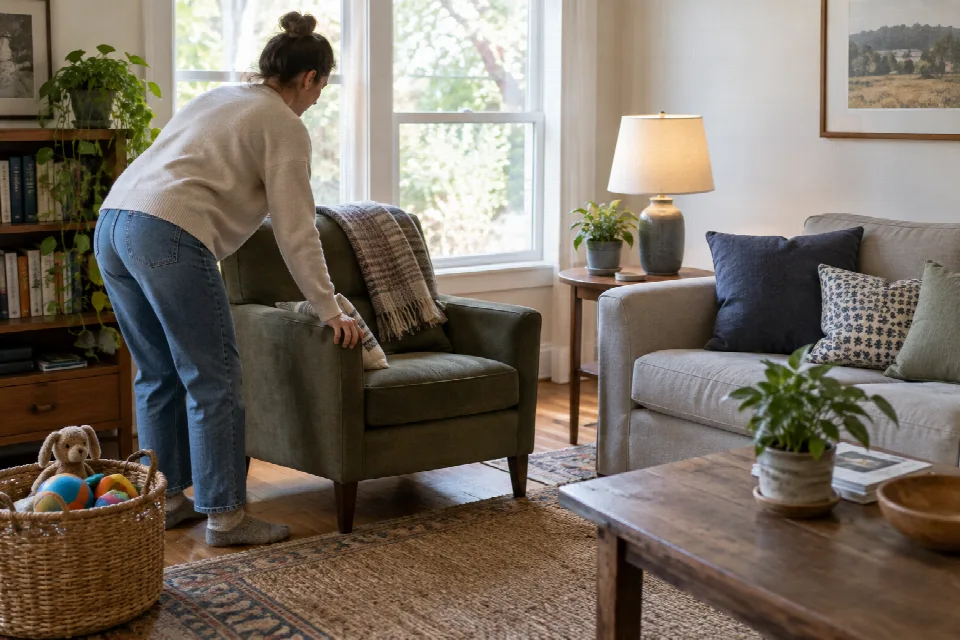
A room refresh can focus on cosmetic changes such as rearranging furniture, updating textiles and painting rather than structural work. The goal isn’t to replace everything: it’s to make the space work better for the people who use it.
Whether you’re working on a living room, bedroom or family space, begin with what you already have. Then choose a few changes that fit your priorities, your household and the amount you’re comfortable spending.
Start with a plan and a spending limit
Think about what bothers you most. Perhaps there’s nowhere convenient to read, toys end up in the walkway or the room feels visually busy. Pick one or two problems to address first, rather than making a long shopping list.
Set a total spending limit and include supplies, not just decorative items. Write down what you already own and what you might borrow, repurpose or buy. If you’re considering a larger purchase, leave it until you’ve tried the free changes. A quick sketch or phone photo can help you compare ideas before moving anything.
Declutter and rearrange what you already have
Rearranging furniture and decluttering can give a room a fresh layout without buying anything. Start by removing items that belong elsewhere, then decide which pieces need to stay for everyday use.
Try moving a chair closer to a sofa to create a conversation area, or shift a table so there’s a clearer route through the room. You could also pull a piece of furniture away from the wall and see how the arrangement feels. Ask for help with heavy items and keep exits and walkways clear.
Live with the new layout for a few days before making more changes. Notice where people naturally sit, where bags and toys collect, and whether frequently used items are easy to reach.
Repurpose furniture and accessories
Look in other rooms before buying accessories. A basket could hold throws, a small table could become a bedside surface, or a tray could bring together everyday items on a shelf. Swapping pieces between rooms is another way to try a different arrangement.
If you need a piece of furniture, consider whether a secondhand item fits your plan. Check its condition and make sure it suits its intended use before bringing it home. For a family space, think about stability, accessible storage and how easily the piece can be cleaned.
Refresh the room with textiles
Pillows, throws, curtains and rugs offer ways to introduce a different color or texture. Start by swapping items you already own between rooms or changing the combination on a sofa or bed.
If you decide to buy something, consider a pillow cover rather than replacing a whole cushion, or choose one textile that works with several items you already have. For a room used by children, look for materials and care instructions that suit your household. Keep the receipt until you’re sure the color and size work in the space.
Consider paint for walls or furniture
Paint is an option for a feature wall, trim or a small piece of furniture if you want a more noticeable change. You don’t have to paint the entire room: decide which surface matters most to your plan.
Before starting, account for preparation and supplies in your spending limit. Follow the product’s preparation, ventilation and drying instructions, and keep children and pets away from the work area and supplies. If you rent, check with your landlord before painting and discuss any expectations for restoring the surface.
Add greenery and adjust the lighting
A plant or a change in lighting can be part of a room refresh. Consider a cutting from a plant you already have, or move an existing plant to a suitable spot where you’ll remember to care for it.
Choose plants with your household in mind, especially if children or pets might reach them. For lighting, try repositioning a lamp where you need it for reading or another activity. You could also consider changing a lampshade or bulb; check the fixture’s instructions when choosing a bulb. Keep cords away from walkways.
Choose family-friendly finishing touches
Finish with items that have a purpose or meaning for your household. Display a child’s drawing in a frame you already own, group favorite books on a shelf, or give everyday toys a basket close to where they’re used.
Keep the arrangement simple enough to maintain. Place frequently used items within easy reach, secure furniture as appropriate and leave delicate objects out of young children’s reach. Once the room is in use, adjust anything that isn’t working—you can refresh it again without starting from scratch.
Sources
- https://build-construct.com/building/interior-design/32-cheap-room-decor-ideas-for-a-stylish-home-on-a-small-budget/, build-construct.com
- https://www.realsimple.com/ways-to-refresh-living-room-11992418, www.realsimple.com
- https://www.thespruce.com/how-to-refresh-a-living-room-without-buying-anything-new-11886701, www.thespruce.com
- https://m.economictimes.com/magazines/panache/no-painting-no-drilling-8-budget-friendly-changes-that-can-instantly-transform-your-home/articleshow/132597812.cms, m.economictimes.com
- https://www.apartmenttherapy.com/decorating-tips-living-room-under-fifty-dollars-37493702, www.apartmenttherapy.com
- https://www.boredmom.com/creative-home/the-best-low-cost-ways-to-refresh-a-tired-living-room, www.boredmom.com
- https://www.thespruce.com/simple-design-trick-to-transform-a-space-11867671, www.thespruce.com
Savings ideas, once a week
One short email with new tips and guides. No spam, and you can unsubscribe any time.