Start with small, affordable changes
You don’t need to change every routine at once. Start with one or two habits that fit your household, then build on them. Many ideas below cost nothing; others involve a small purchase or help from a landlord.
Heating and cooling can account for around half of household energy use, while water heating can be another significant share. If your home uses electricity for these jobs, temperature and hot-water habits are useful places to look. Results will vary with your home and routines.
Kitchen: Cooking and appliance habits
For a small meal or leftovers, consider using a microwave or toaster oven rather than heating the full oven. When cooking on the stove, put lids on pots and boil only the water you need.
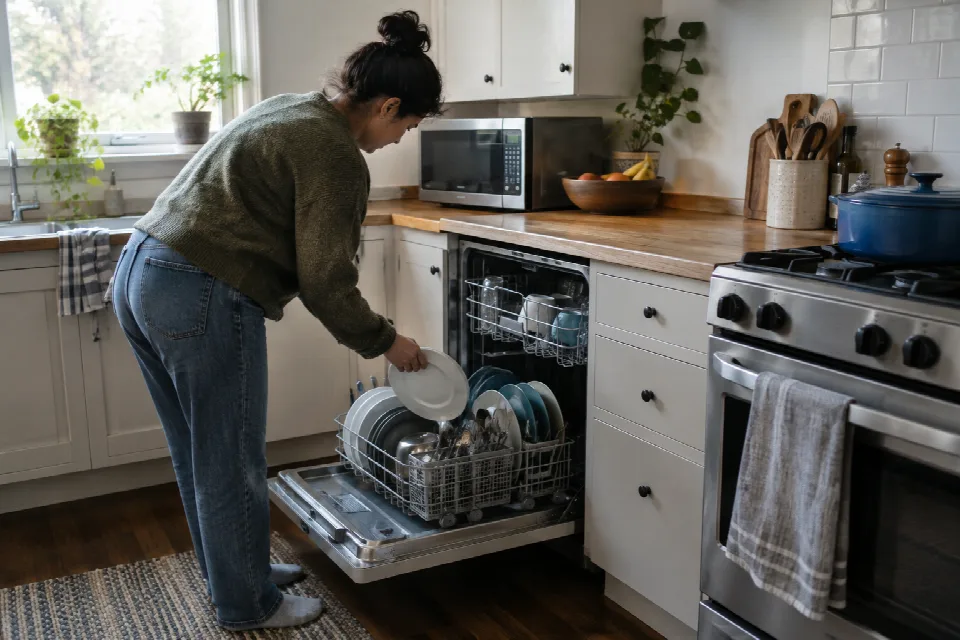
If you use a dishwasher, wait until it’s full, scrape dishes instead of pre-rinsing them, and choose air-dry when available. These habits can fit into your existing routine: load dishes after meals and start the machine once there’s enough for a full load.
Give the refrigerator some attention, too. Avoid overfilling it, keep its coils clean, and check its temperature settings. If you rent and aren’t sure how to clean the coils safely, ask your landlord or check the appliance instructions.
Living room: Lighting, electronics, and temperature
Start with lights your household uses often. When a bulb needs replacing, consider an ENERGY STAR-certified LED. Turn lights and electronics off when you leave the room. A smart power strip is another option for reducing standby power from electronics such as TVs.
Use curtains or blinds alongside your heating and cooling routine. Closing them on hot afternoons and opening them on sunny winter days can help manage indoor temperatures. A programmable thermostat is an option if you control your home’s settings and want to schedule temperature changes.
Choose settings that work for your household rather than trying to make a big change overnight. If you share a home, agree on a routine everyone can follow.
Bedrooms: Nighttime routines
Make a quick lights-off check part of bedtime. Turn off lamps and chargers that aren’t needed, and consider an LED night-light where a little light is useful. Children can help by switching off their own lights, with an adult’s guidance.
If your household is comfortable with it, consider adjusting the thermostat overnight. In warmer weather, a ceiling fan can help you feel cooler and may let you use a higher thermostat setting.
Bathroom: Hot-water habits
Try shorter showers and consider a low-flow showerhead or faucet aerator. If you notice a leaking faucet, arrange a repair rather than letting it continue to drip; a leak can waste heated water.
Renters can ask their landlord before replacing fixtures or changing shared equipment. If you’re considering a water-heater adjustment, check the manufacturer’s guidance and consult a qualified professional about a suitable setting for your household.
Laundry room: Washing and drying
When garment instructions allow, wash in cold water and wait until you have a full load. You can also air-dry clothes when practical. If you use a dryer, clean its lint filter after every load.
Choose a laundry routine that works for your space. An indoor drying rack or a suitable outdoor line may make air-drying easier, even if you only use it for part of a load.
Whole-home checklist: Keep the habits going
Pick a few reminders to review together each week:
- Turn off lights and electronics when leaving a room.
- Run the dishwasher and washing machine with full loads.
- Clean the dryer lint filter after each load.
- Keep heating and cooling filters clean and vents unobstructed.
- Report leaks or maintenance issues to the person responsible for repairs.
For a more tailored starting point, consider asking your utility about a home energy audit. In the meantime, focus on changes your household can repeat comfortably. Check your bills over time, while remembering that weather and other changes in usage can affect the comparison.
Sources
- https://electricityplans.com/save-on-electric-bill/, electricityplans.com
- https://www.energy.gov/femp/home-energy-checklist, www.energy.gov
- https://natural-resources.canada.ca/energy-efficiency/home-energy-efficiency/make-small-changes-add, natural-resources.canada.ca
- https://www.ahfc.us/blog/posts/room-room-tips-save-energy-and-money, www.ahfc.us
- https://extension.colostate.edu/resource/do-it-yourself-energy-checklist-for-homeowners/, extension.colostate.edu
- https://www.switchsquid.com/blog/104-energy-saving-tips-for-every-room-in-your-home/, www.switchsquid.com
- https://www.energysage.com/energy-efficiency/ways-to-save-energy/, www.energysage.com
- https://www.energystar.gov/products/recent_program_updates/low-no-cost-tips, www.energystar.gov
- https://www.energy.gov/cmei/femp/home-energy-checklist, www.energy.gov
- https://www.energy.gov/sites/prod/files/HomeCooling101-final.pdf, www.energy.gov
Savings ideas, once a week
One short email with new tips and guides. No spam, and you can unsubscribe any time.