School drop-offs, work commutes and family visits may not leave much room to change where you drive. But you can still look for ways to use less fuel on the trips you already make. Start with one or two habits that fit your routine, then check your progress over time.
Drive smoothly and observe speed limits
Try accelerating gradually instead of rushing away from a stop. Look ahead for traffic lights, slowing vehicles and other reasons you may need to brake. When conditions allow, ease off the accelerator rather than waiting until the last moment to slow down. Aggressive driving—including rapid acceleration, hard braking and speeding—can reduce gas mileage.
Keep to the posted speed limit and choose a speed that is safe for the conditions. Fuel economy typically drops rapidly above 50 mph, although the effect varies by vehicle. On a familiar drive, focusing on a steady, appropriate speed can be a straightforward habit to practice.
Use cruise control and limit idling when appropriate
On a clear, flat highway, cruise control can help maintain a steady speed. It is an option for suitable conditions, not a substitute for paying attention to the road. Use your judgment and follow your vehicle’s guidance; leave it off when traffic, weather or road conditions make it inappropriate.
Also notice when the engine is running while the car is parked. Idling uses fuel without moving the vehicle. If you are waiting somewhere it is safe and appropriate to switch off the engine, consider doing so. Follow local rules and your vehicle’s guidance, and keep safety and passenger needs in mind.
Check tire pressure and follow the maintenance schedule
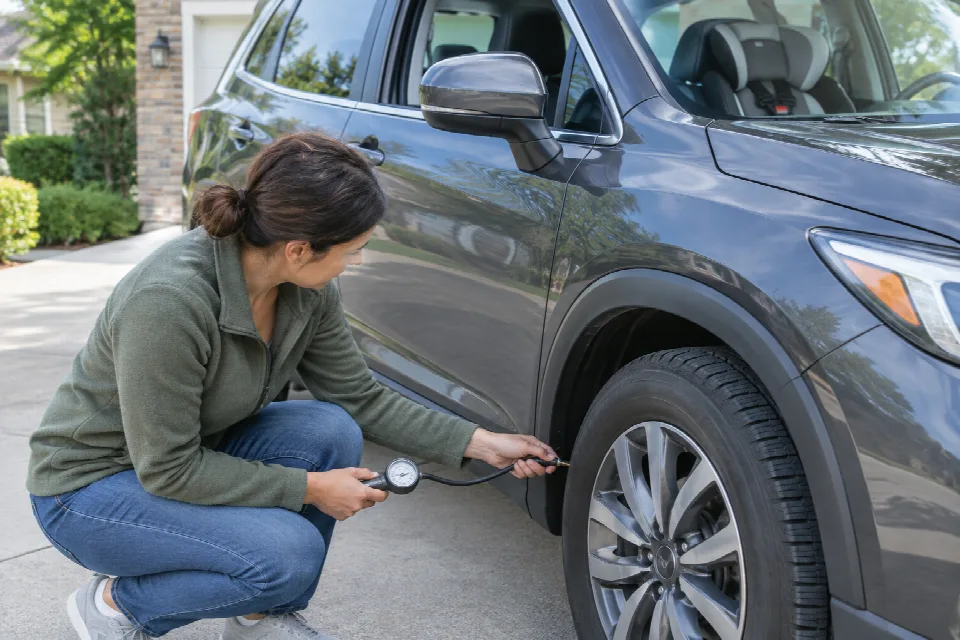
Check tire pressure monthly when the tires are cold, and use the vehicle manufacturer’s recommended pressure. Proper inflation can improve gas mileage by up to 3%. Keep a tire gauge handy, or use a suitable gauge when you have access to one.
Your owner’s manual is also a useful starting point for routine maintenance. Follow its schedule for items such as oil changes and air filters, and use the recommended grade of motor oil. If you are unsure what your vehicle needs or notice a problem, ask a qualified mechanic rather than guessing.
Remove unnecessary weight and roof cargo
Take a look in the trunk and cabin for things that have been riding along long after you needed them. Extra weight can reduce gas mileage, and roof racks or cargo can add drag. Removing items you do not need, including roof cargo or a rack when practical, is a small adjustment that does not require changing your route.
Keep the supplies that matter for your family’s safety and ordinary travel. The goal is not an empty car; it is to avoid carrying unnecessary items out of habit.
Choose the fuel grade specified in your owner’s manual
Before your next fill-up, check which fuel grade your vehicle’s manufacturer specifies. Premium fuel is rarely needed when it is not required and does not improve fuel economy in most vehicles. If the manual requires a particular grade, follow that guidance rather than choosing a different one solely to reduce the cost of a fill-up.
Track fuel use and make a simple routine
A simple record can help you see what is happening with your own vehicle. At a fill-up, note your odometer reading or reset a trip meter. At the next fill-up, record the miles driven and the gallons added. Divide miles by gallons to estimate miles per gallon. Try filling to a consistent level when comparing results.
Keep the routine manageable. You might check tire pressure once a month, clear unneeded cargo when you clean the car, and review the manual before a service or fuel purchase. Compare your fuel-use notes over several fill-ups rather than expecting one trip to tell the whole story. Results will depend on your vehicle and driving.
Sources
- https://www.fueleconomy.gov/feg/driveHabits.jsp, www.fueleconomy.gov
- https://gasprices.aaa.com/news/fuel-saving-tips/, gasprices.aaa.com
- https://www.experian.com/blogs/ask-experian/how-to-save-money-on-gas/, www.experian.com
- https://www.consumerreports.org/cars/fuel-economy-efficiency/expert-fuel-saving-tips-how-to-get-more-miles-per-dollar-a1096060259/, www.consumerreports.org
- https://gasbudgeter.com/blog/ways-to-save-money-on-gas, gasbudgeter.com
- https://money.usnews.com/money/personal-finance/articles/how-to-avoid-sticker-shock-at-the-gas-pump, money.usnews.com
Savings ideas, once a week
One short email with new tips and guides. No spam, and you can unsubscribe any time.