Lease or buy: where to start
The quickest win: compare the full cost of each option for the same number of years, not just the monthly payment. Include what you’ll pay upfront and what you might have left when that time is up.
Leasing often has a lower monthly payment. Buying can cost less over the long run, especially if you keep the car after paying off the loan. Neither answer fits every budget, so start with how long you expect to need the car. [0]
How leasing and buying differ
With a lease, you pay to use the car for an agreed period. At the end, you generally return it, unless you choose an available purchase option. You don’t own the car just because you made the lease payments. [0]
When you buy, you own the car. If you use a loan, you make payments under the loan agreement. Your equity is the car’s value minus what you still owe. That value can change, so it’s an estimate when you’re planning ahead. [0]
A lease may be worth comparing if you want a newer car more often. Buying may be worth comparing if you want to keep a car longer or have more flexibility in how you use it. [5]
Compare total costs over the same time frame
Pick a time frame that fits your plans. Then ask for a lease quote and a purchase quote for cars that meet your needs. If your time frame extends beyond one lease, include the estimated cost of getting another car for the remaining time.
For each option, add the costs you expect during that period:
- Money due upfront, including any down payment and fees.
- Monthly payments across the full comparison period.
- Taxes, registration, insurance and maintenance you expect to pay.
- For a lease, any expected charges for mileage, wear or returning the car.
Check the quotes so you don’t count a tax or fee twice. For the lease, use the cost of returning the car at the end of your comparison. For the purchase, estimate the car’s value at that point and subtract any remaining loan balance. Subtract that estimated equity from your purchase costs. If you owe more than the car is worth, add the difference instead. [0][6]
These are planning estimates, not guarantees. Try a higher and lower value for the car to see how much the result changes. You can also compare a used-car purchase quote with a lease quote.
Factor in mileage, wear and family needs
Before you sign a lease, check its mileage limit and the charge for going over it. Leases can also include charges for excess wear. The details depend on the agreement. [5]
Estimate your driving with everyday life in mind. Add your commute, school or child care trips, errands and visits to family. If your schedule might change, make a second estimate with more miles.
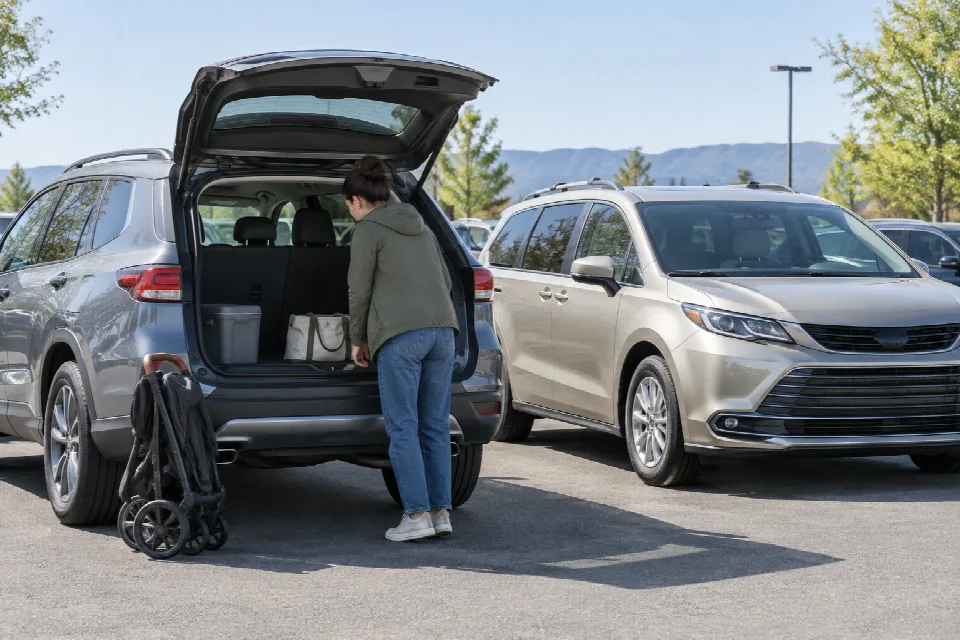
Think about the car’s space, too. Will your car seats, stroller, sports gear or pets fit comfortably? Ask what the lease considers excess wear, especially if kids or pets will ride along. If you want to customize the car, check what the agreement allows. [5]
Check insurance, maintenance and other costs
Ask an insurer for quotes for both cars and the coverage each agreement requires. A premium is the amount you pay for insurance. A deductible is the amount you pay toward a covered claim before insurance pays its share. Compare both, along with the coverage.
Also ask what maintenance and repairs are covered, for how long, and what you would pay yourself. Warranty coverage may apply during a lease, but don’t assume every service or repair is included. [7]
Add estimated costs for each option to your comparison. Leave room in your budget for expenses that may be hard to predict.
Review the terms with a qualified professional
Ask for the full lease or loan terms before deciding. Take time to review the amount due at signing, payment schedule, fees and what happens at the end. For a lease, ask about mileage, wear, early return and any purchase option.
If you’re considering a loan, ask about the annual percentage rate, or APR. It expresses the cost of borrowing as a yearly rate, including interest and certain fees. If a term or cost is unclear, ask for an explanation. A qualified financial professional can help you review how the options fit your circumstances.
Quick wins
- Choose the same time frame for both options.
- Add upfront costs, payments, insurance, maintenance and expected fees.
- Estimate the purchased car’s value minus any loan balance.
- Check lease mileage and wear terms against your family’s routine.
- Review the full agreement and ask a qualified professional about anything you don’t understand.
Sources
- https://www.nerdwallet.com/auto-loans/learn/7-lease-vs-buy-questions-right, www.nerdwallet.com
- https://roadethos.com/car-buying/lease-or-buy-how-to-decide-in-2026, roadethos.com
- https://calccottage.com/lease-vs-buy-car-2026/, calccottage.com
- https://financefacts101.com/lease-vs-buy-car/, financefacts101.com
- https://hitcalc.com/blog/car-lease-vs-buy, hitcalc.com
- https://www.carc.com/guides/lease-vs-buy, www.carc.com
- https://www.bankrate.com/loans/auto-loans/leasing-vs-buying-a-car/, www.bankrate.com
- https://pitcompare.com/articles/en/buying-vs-leasing-a-car-2026-tax-break, pitcompare.com
- https://www.bankrate.com/loans/auto-loans/what-is-a-car-lease/, www.bankrate.com
- https://www.nerdwallet.com/insurance/auto/learn/insurance-premium-definition, www.nerdwallet.com
- https://www.bankrate.com/loans/auto-loans/what-is-an-auto-loan/, www.bankrate.com
Savings ideas, once a week
One short email with new tips and guides. No spam, and you can unsubscribe any time.