A comfortable home doesn't have to come entirely from a store's new arrivals. Secondhand shopping can help stretch a household budget, especially when you're furnishing several rooms at once. The key is to be selective: a used dining table and a used car seat deserve very different levels of scrutiny.
How to decide between secondhand and new
Start with three questions: Can you inspect it thoroughly? Can you clean it to your satisfaction? Would a fault be inconvenient or could it affect someone's safety? Durable items with straightforward construction are often good candidates for buying used. For safety-critical or hard-to-clean items, buying new may be the more practical choice.
Consider the whole purchase, not just the asking price. Factor in transport, cleaning supplies and any repairs or missing parts. If you can't test an item or the seller can't answer basic questions about it, it's reasonable to walk away.
Secondhand furniture and decor to consider
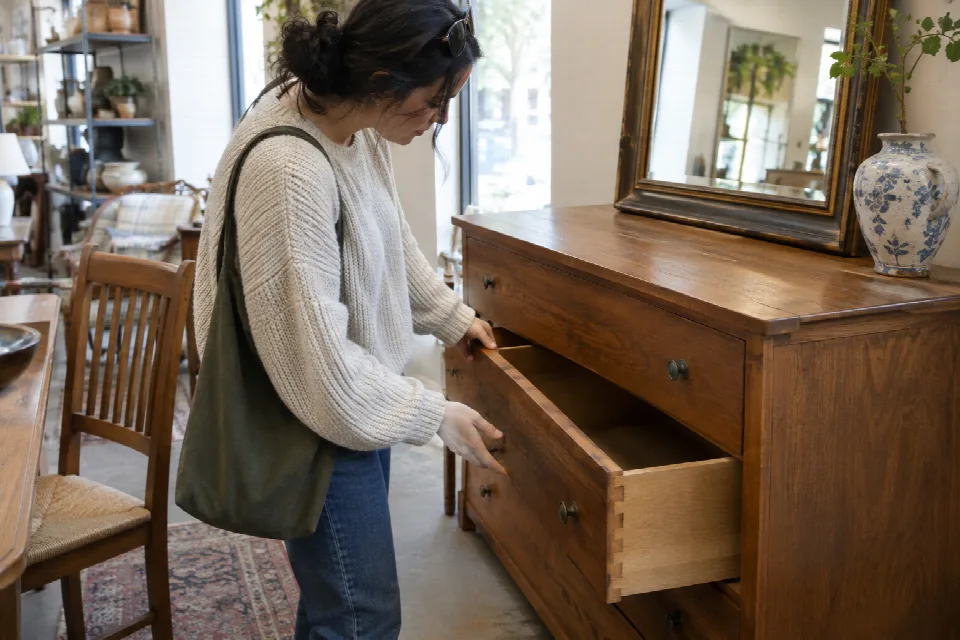
Solid wood dressers, dining tables, coffee tables and chairs are useful places to start. Look for sturdy construction rather than a perfect finish: a scratch may matter less to you than a loose leg or a drawer that won't open. Open every drawer and door, and check the underside and joints. Sit on chairs and gently test tables for wobbling.
For smaller finds, consider mirrors, framed art, vases, baskets and lamps. Check mirrors and frames for cracks, and examine pottery and glass for chips. With lamps, inspect the cord and plug and ask to see the light working. If anything electrical looks damaged, leave it or ask a qualified repair professional about it before use.
Measure your space before you shop, including doorways and stairs. A piece that suits your room still needs to make it into the house. For upholstered furniture, take extra time to inspect for stains, odors and signs of pests; pass if you're uncomfortable with its condition.
Secondhand kitchen and household items to consider
Cookware, glassware and ceramics can be worth a look. Check stainless steel, cast iron or ceramic pieces for damage, and choose items you can clean thoroughly. Examine handles, lids and rims as well as cooking surfaces. If a pan is damaged or a dish is chipped, leave it behind rather than counting on a repair.
Board games are another household option. Open the box and compare the contents with the component list, if available. Missing pieces might be manageable for some games but make others frustrating to play. Clean items appropriately before putting them into regular use.
Used electronics and appliances: What to check
A used laptop, television or large appliance may be worth considering if you can verify what you're getting. Ask for the model number and any information about repairs. Check the model for recalls, then test the main functions before handing over payment. For an appliance, confirm its dimensions and connections work for your home.
For electronics, ask whether chargers, remotes and other necessary accessories are included. Check that you can set up the device for your own use and that the previous owner's information has been removed. If testing isn't possible, or the item has damage you can't assess, consider another listing. Ask about the return policy too, where one is offered.
When to buy new: Baby gear, mattresses and personal items
Consider buying car seats, booster seats, cribs and bassinets new. With safety-critical baby gear, a used item's history, condition or recall status may be difficult to establish. Buying new does not replace checking for recalls or following the manufacturer's instructions.
A new mattress and bedding may also be preferable if you can't judge the cleanliness or condition of used options. Apply the same thinking to personal or hard-to-clean items, such as breast pumps and humidifiers. Make a list of what your family needs immediately, then prioritize those purchases while looking secondhand for less safety-sensitive furnishings.
Where to shop and how to inspect secondhand finds
Try thrift stores, estate sales, online resale sites and local marketplace listings. Bring measurements, a tape measure and a short list so you can focus on what fits your home. Before buying, take a final look for damage, check that moving parts work and confirm how you'll transport the item.
For products with a model number, check for recalls through the Consumer Product Safety Commission and the manufacturer. If you're unsure about an item's condition, keep looking: a useful secondhand find should work for your home, not create an unexpected project.
Sources
- https://build-construct.com/home-improvement-renovations/budget-friendly-home-furnishing-sourcing-and-restoring-second-hand-pieces/, build-construct.com
- https://www.consumerreports.org/money/saving-money/expert-tips-for-buying-secondhand-products-to-save-you-money-a7940674189/, www.consumerreports.org
- https://www.marthastewart.com/things-you-should-always-buy-at-thrift-store-12114235, www.marthastewart.com
- https://www.southernliving.com/designers-thrifting-for-your-home-12004236, www.southernliving.com
- https://www.marthastewart.com/what-to-always-buy-at-thrift-stores-12034224, www.marthastewart.com
- https://www.familyhandyman.com/list/home-items-to-buy-used/, www.familyhandyman.com
- https://www.bhg.com/home-items-to-buy-thrifted-11908302, www.bhg.com
- https://www.sharetown.com/blog/furniture-buying-for-new-parents-complete-guide, www.sharetown.com
- https://www.cpsc.gov/, www.cpsc.gov
Savings ideas, once a week
One short email with new tips and guides. No spam, and you can unsubscribe any time.